The SEO toolbox looked pretty much the same for a decade: keyword research, rank tracking, technical audits, backlinks. Then AI search arrived, and “showing up when customers look for you” stopped meaning just Google’s ten blue links. Now it also means AI Overviews, ChatGPT, Perplexity, and Gemini: surfaces your classic rank tracker never sees.
The good news: the fundamentals still work, and most of the classic tools are still the right ones for the job. You just need a few new instruments alongside them.
Search Engine Optimization (SEO)
SEO improves a site’s ranking in search results by enhancing relevance and quality. By optimizing for these factors, you can increase your visibility and achieve higher rankings.
Read MoreThis guide covers the 31 best SEO tools for 2026, organized by the job you need done: keyword research, rank tracking, the new AI visibility and GEO category, on-page and technical SEO, content optimization, link building, analytics, the all-in-one suites, and one hosting-integrated option. Free options are marked throughout, so you can build a working toolkit before you spend a dollar.
How SEO Changed (And What It Means For Your Toolkit)
Three shifts define search in 2026, and each one changes what your tools need to measure.
AI answers sit above the results. Google’s AI Overviews (and its full AI Mode) answer many questions directly on the results page, and assistants like ChatGPT answer them without a results page at all. Ranking #1 matters less if the answer above you never sends the click. The counter-move is being the source those answers cite. We cover exactly how in our guide to showing up in Google AI Overviews.
GEO joined the vocabulary. Generative engine optimization (GEO), sometimes called answer engine optimization (AEO), is the practice of making your content visible, cited, and accurately represented in AI-generated answers from tools like ChatGPT, Perplexity, and Google AI Overviews. It extends SEO rather than replacing it: the same foundations, with new surfaces to win. Being cited by AI engines is the new being ranked. Our guide to earning AI citations goes deep on the tactics.
Entities beat strings. Search engines and LLMs increasingly understand brands, products, and people as entities with attributes and relationships, not just keywords on a page. Consistent naming, structured data, and topical authority matter more than keyword density ever did. (New to this? Start with entity SEO.)
For your toolkit, that means one genuinely new category (AI visibility trackers that tell you whether ChatGPT, Perplexity, and AI Overviews mention or cite your brand) plus AI features arriving inside the classic tools. Everything else on this list still earns its place the old-fashioned way.
The SEO Tool Categories At A Glance

- Keyword research tools tell you what your customers actually type (and increasingly, what they ask AI). Start here — every other SEO decision depends on it. Our keyword research guide covers the method.
- Rank and SERP tracking tools show where you stand in classic search results and how your changes move the needle.
- AI visibility and GEO tools track whether AI engines mention your brand, cite your pages, and describe you accurately.
- On-page and technical SEO tools keep your site crawlable, fast, and structured so both search engines and AI crawlers can understand it. (For the full method, see our technical SEO audit walkthrough.)
- Content optimization tools help you write pages that cover a topic well enough to rank — and to be quoted by AI answers.
- Link building tools help you earn the backlinks that still anchor authority, for classic rankings and AI citations alike. (Method first: our link building strategy guide.)
- Analytics and reporting tools tell you whether any of it is working.
- All-in-one suites bundle most of the above for teams ready to consolidate.
- Hosting-integrated SEO bundles guided SEO into your hosting plan, for owners who don’t want to assemble a toolbox at all.
Keyword Research Tools
1. Google Keyword Planner (Free)
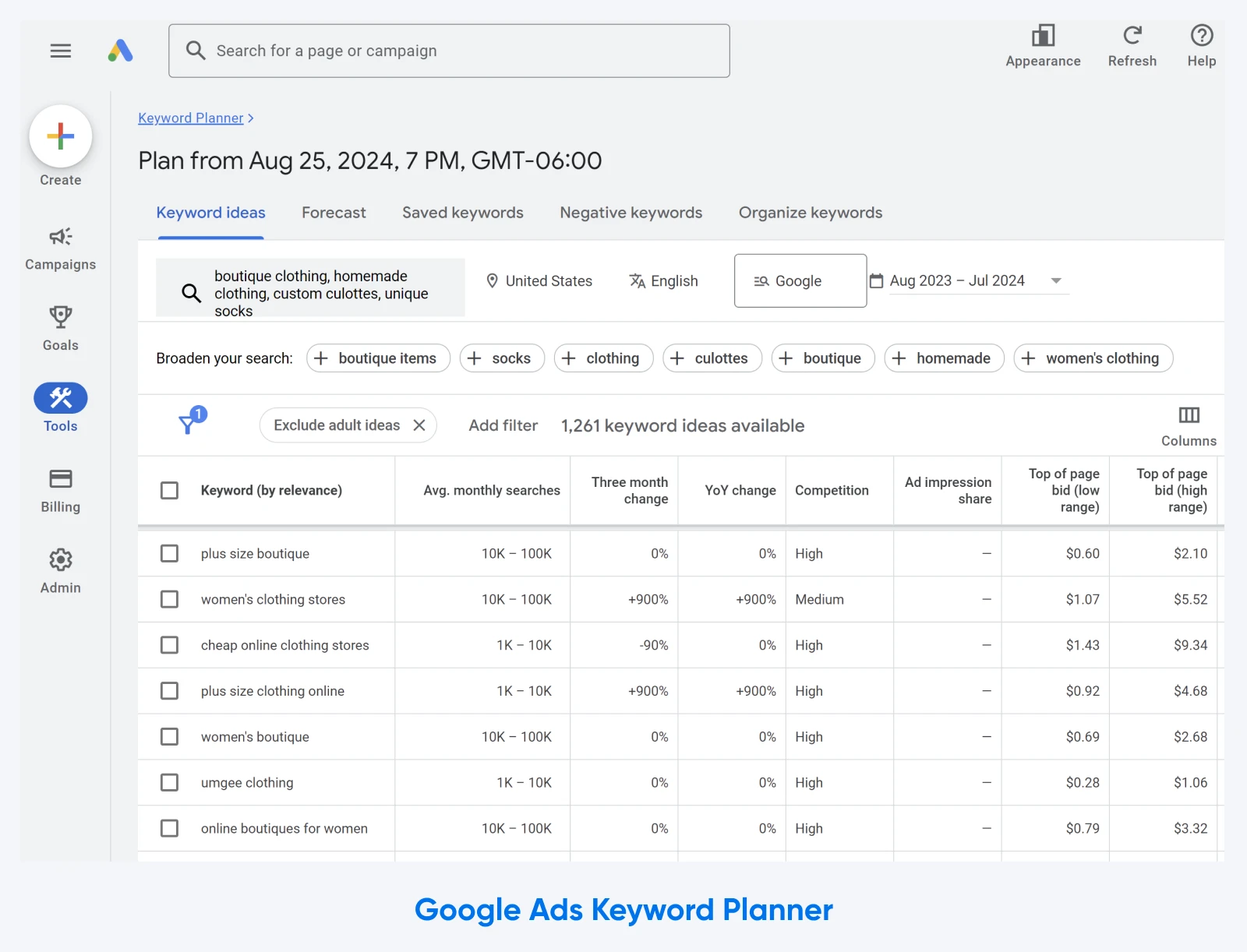
Google’s Keyword Planner is still the baseline: search volumes, trends, and competition data straight from the source. It’s built for ad campaigns, but it’s equally useful for choosing organic targets. Type in a few terms from your business and see what people search for.
Key Features
- Volume ranges, historical trends, and competition for any keyword
- Keyword ideas generated from a seed term or your website URL
- Monthly breakdowns that reveal seasonality before you commit to a topic
Pricing
Free with a Google Ads account (no ad spend required).
2. Mangools KWFinder
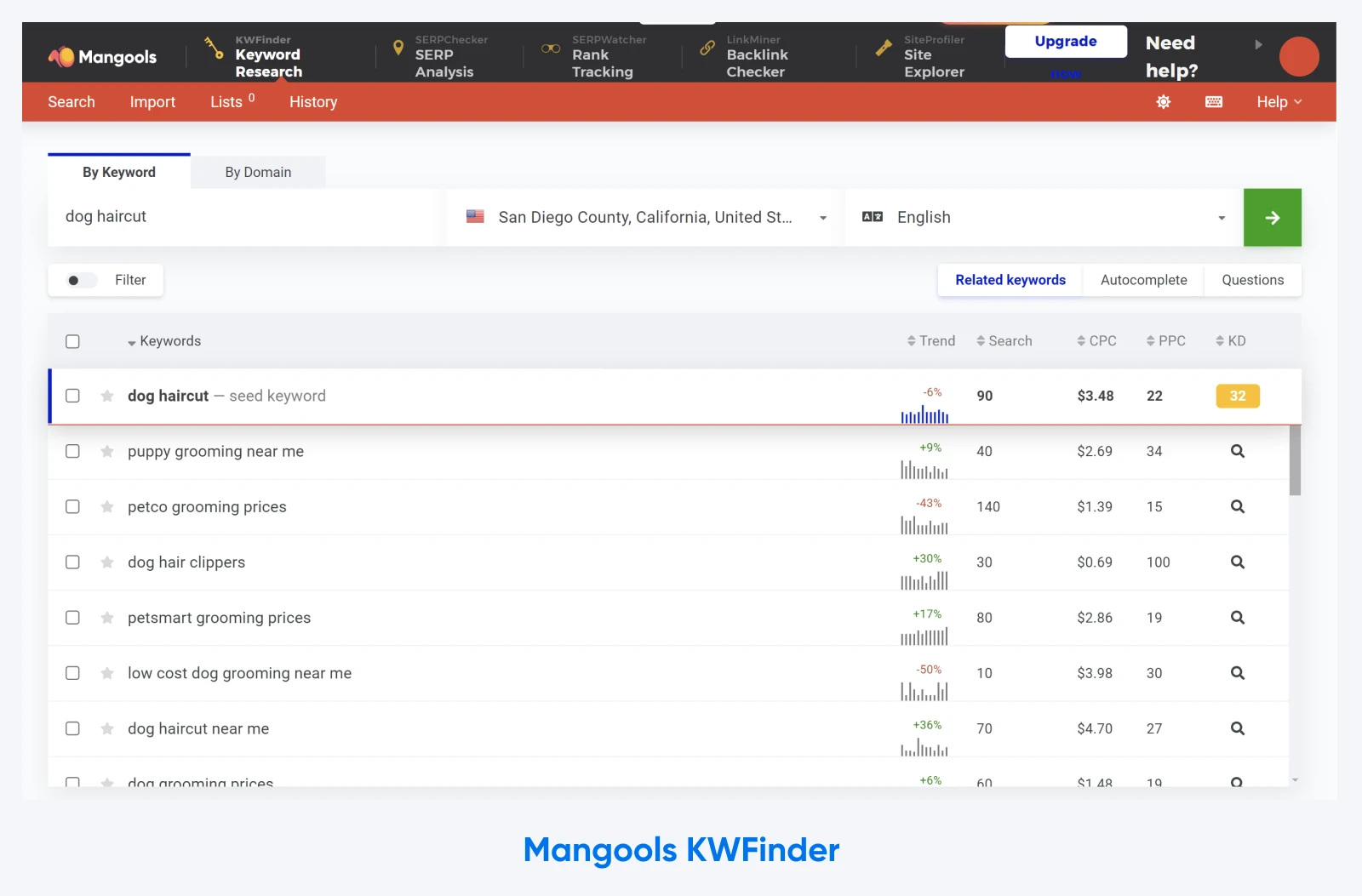
KWFinder is the beginner-friendly favorite for finding long-tail keywords you can actually win. The interface makes keyword difficulty legible at a glance, which is exactly what a small team needs when it can’t afford to chase terms the big players own.
Key Features
- Keyword difficulty scores that are easy to read and act on
- Long-tail and question keyword discovery by seed term or competitor domain
- Local keyword research for city- and region-level targeting
Pricing
Paid plans (part of the Mangools suite) with a free trial.
3. AnswerThePublic
AnswerThePublic maps the questions people ask around any topic — who, what, why, how, versus, near me — and visualizes them in one view. In an era where searches (and AI prompts) are increasingly phrased as full questions, that’s exactly the raw material your content plan needs.
Key Features
- Question, preposition, and comparison keyword maps from one seed term
- Search listening alerts that track how questions shift over time
- Exportable visualizations that make content planning meetings shorter
Pricing
Limited free searches; paid plans for daily use.
4. AlsoAsked
AlsoAsked pulls live “People Also Ask” data from Google and clusters it by intent, showing how questions branch into follow-ups. It’s the fastest way to see the structure of a topic — which is also how AI answer engines assemble their responses, making this doubly useful for GEO-minded content planning.
Key Features
- Live People Also Ask trees for any query, by country and language
- Intent clustering that shows how questions relate and branch
- Bulk search and CSV upload for building FAQ sections at scale
Pricing
A few free searches to try it; paid plans for regular use.
Rank & SERP Tracking Tools
5. Google Search Console (Free)
If you use exactly one tool from this list, make it Google Search Console. It shows the queries you already rank for, your clicks, impressions, and average position, plus indexing and Core Web Vitals reports. It’s straight from Google, and it’s free forever. One 2026 caveat worth knowing: impressions from AI Overviews are blended into your totals, so a page with huge impressions and few clicks may be getting consumed inside AI answers rather than ignored.
Key Features
- Real query, click, impression, and position data for your site
- Index coverage and URL inspection to catch crawl problems early
- Core Web Vitals and mobile usability reports
Pricing
100% free.
6. SE Ranking
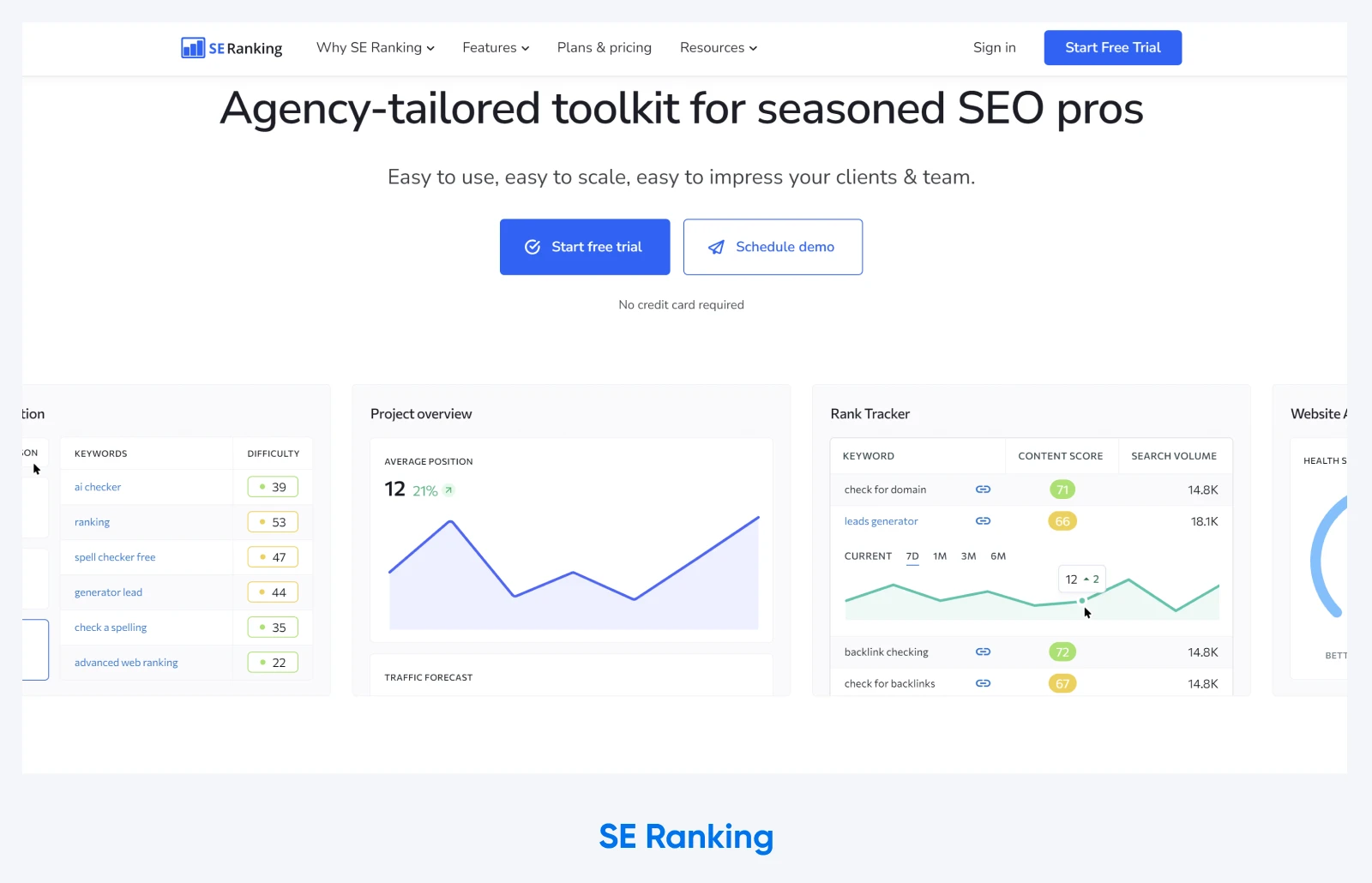
SE Ranking is the small-business sweet spot for serious rank tracking: accurate position data by location and device, competitor monitoring, and site audits in one affordable package. It has kept pace with the times, too, adding AI-search visibility tracking alongside its classic SERP features.
Key Features
- Daily rank tracking by keyword, location, and device
- Competitor rank and visibility comparisons
- Built-in site audit and backlink monitoring
Pricing
Paid plans with a free trial.
7. SerpRobot
SerpRobot does one thing well: it checks your keyword positions, on a schedule, with alerts when things move. If a full suite is more than you need, this is the cheap-and-cheerful way to keep tabs on the rankings you care about, on Google and beyond, including Bing and YouTube.
Key Features
- Scheduled position checks with automatic alerts
- Tracks multiple search engines, not just Google
- Simple visual reports you can skim in a minute
Pricing
Free manual checks; inexpensive paid monitoring.
AI Visibility & GEO Tools
These tools answer the question your rank tracker can’t: when someone asks ChatGPT, Perplexity, Gemini, or Google’s AI for a recommendation in your space, do you come up? They track whether AI engines mention your brand, which pages they cite, and how they talk about you. They’re also the fastest-moving category on this list.
8. Semrush AI Visibility
Semrush’s AI Visibility toolkit extends the platform’s classic strengths into AI search: track how your brand shows up across AI engines and AI Overviews, benchmark against competitors, and add GEO measurement inside the Semrush ecosystem your team may already use.
Key Features
- AI mention tracking across ChatGPT, Google AI, and other platforms
- Competitive benchmarking for AI-search presence
- Part of the broader Semrush platform (keywords, content, and reporting in one login)
Pricing
Paid; see Semrush’s pricing page for how it’s packaged.
9. Ahrefs Brand Radar
Brand Radar is Ahrefs’ answer to the AI visibility question: track your brand’s presence in LLMs and AI search, monitor the prompts that matter to your business with custom prompt tracking, and benchmark against competitors, all built on Ahrefs’ own web index. It pairs naturally with the backlink and keyword data the platform is known for.
Key Features
- Brand visibility tracking across LLMs and AI search surfaces
- Custom prompt tracking for the questions your customers actually ask
- Competitor benchmarking in AI search
Pricing
Paid, with its own plans separate from core Ahrefs subscriptions; a free AI Visibility Checker is available.
10. Profound
Profound is the enterprise heavyweight of answer engine optimization. It monitors how your brand appears across ChatGPT, Perplexity, Claude, Gemini, Copilot, Grok, and Google AI Overviews, tracks prompt volumes (what people ask AI), and reports which sources the engines cite. If AI search is already a board-level topic at your company, this is the tier you’re shopping in.
Key Features
- Answer engine insights across all the major AI platforms
- Prompt volume data — the AI-era equivalent of keyword volume
- Citation and source analysis showing which pages AI answers pull from
Pricing
Enterprise-focused; plans on Profound’s pricing page.
11. Otterly.AI
Otterly.AI makes AI search monitoring approachable for marketing teams and agencies: track where your brand is mentioned and your pages are cited across ChatGPT, Perplexity, AI Overviews, AI Mode, Gemini, Copilot, and Claude, with country-level breakdowns and prompt research to find the questions worth targeting.
Key Features
- Brand mention and citation tracking across seven AI engines
- Prompt research to discover what your audience asks AI
- Brand and competitor reports by country and funnel stage
Pricing
Paid plans with a free trial.
12. Peec AI
Peec AI focuses on the metrics marketing teams report on: visibility (how often AI mentions you), position (where you appear in the answer), and sentiment (how AI describes you), tracked across models and countries with competitor comparisons. Clean dashboards make it a good fit for teams that need AI-search numbers in the monthly report without an enterprise contract.
Key Features
- Visibility, position, and sentiment metrics for your brand in AI answers
- Custom prompt tracking with tags, across models and countries
- Source analysis showing which domains AI engines lean on in your space
Pricing
Paid plans with a free trial.
On-Page & Technical SEO Tools
13. Google PageSpeed Insights (Free)
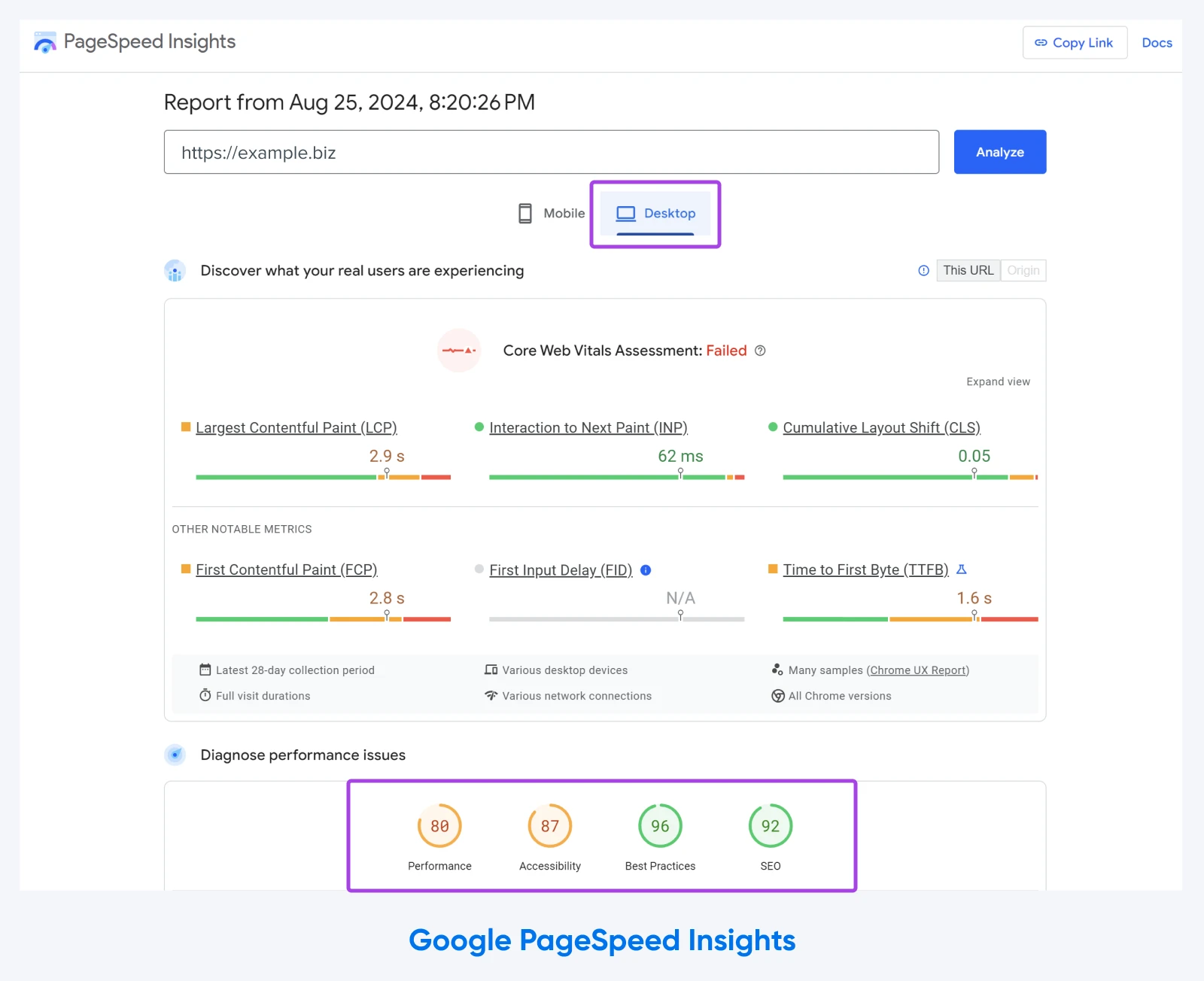
PageSpeed Insights grades any URL against Core Web Vitals using both lab tests and real-user data, then tells you specifically what to fix. Speed remains a ranking factor and a conversion factor, and this is the free, canonical way to measure it.
Key Features
- Core Web Vitals scores from real Chrome users as well as lab tests
- Prioritized, specific fix recommendations per page
- Separate mobile and desktop grading
Pricing
Free.
14. Google Rich Results Test (Free)
The Rich Results Test validates your structured data and shows which rich results your page is eligible for. Schema markup has quietly become a GEO tactic, too: structured data helps AI systems parse who you are and what your content claims, so this free validator earns a permanent bookmark.
Key Features
- Validates schema markup against what Google actually supports
- Tests live URLs or pasted code
- Shows exactly which rich result types your page qualifies for
Pricing
Free.
15. Screaming Frog SEO Spider
Screaming Frog crawls your site the way a search engine does and surfaces everything technical: broken links, redirect chains, duplicate titles, missing metadata, and orphan pages (pages nothing links to). It’s the standard tool for a technical SEO audit, and the free tier covers small sites comfortably.
Key Features
- Full-site crawls exposing broken links, redirects, and duplicate content
- Metadata, header, and structured-data extraction at scale
- Integrates with Google Analytics and Search Console data
Pricing
Free up to 500 URLs per crawl; paid license for larger sites.
16. Yoast SEO
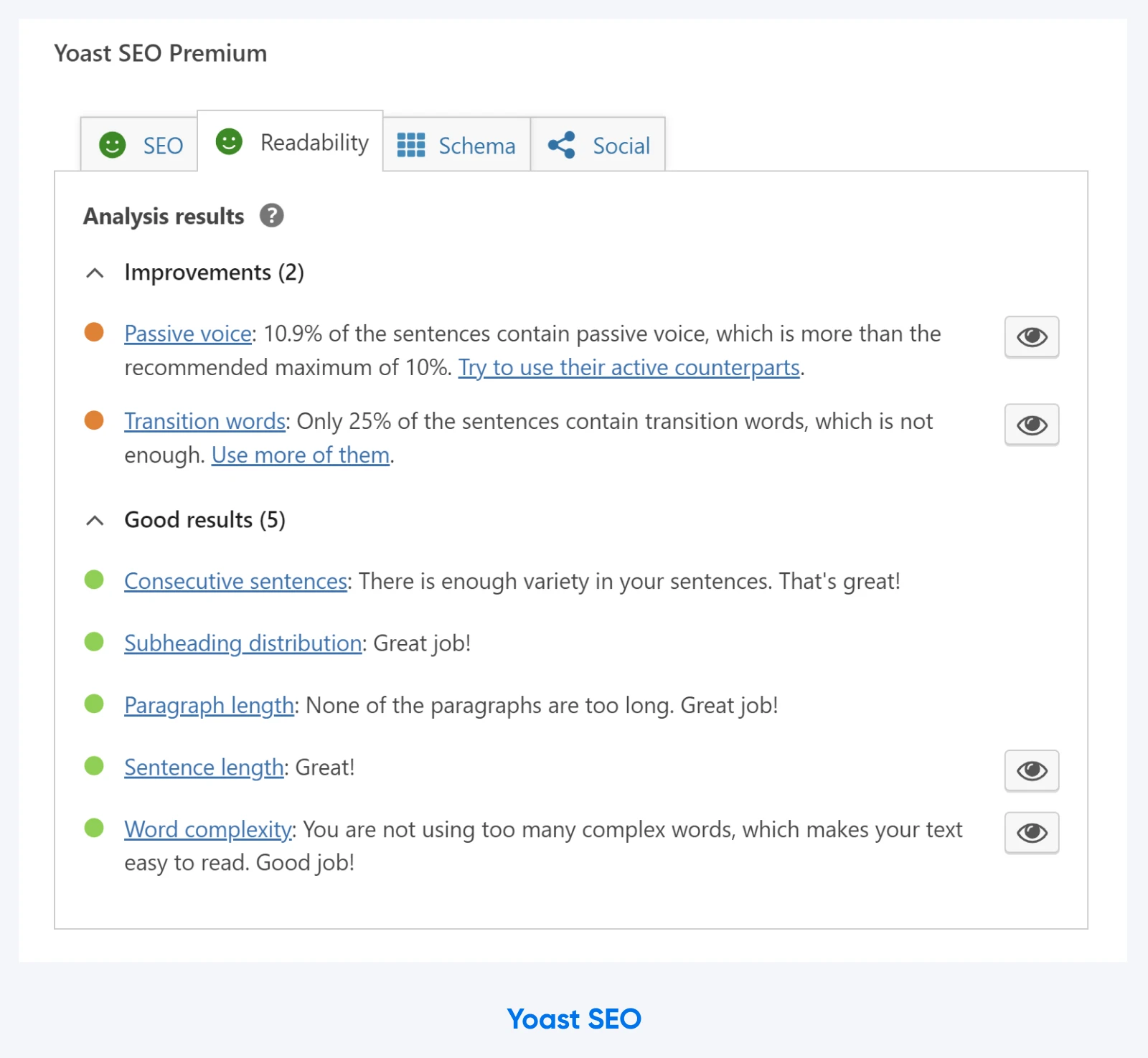
If your site runs on WordPress, Yoast SEO handles the on-page fundamentals from inside the editor: titles, meta descriptions, XML sitemaps, canonical URLs (the version of a page search engines should index), and schema output, with readability and keyword checks as you write.
Key Features
- Title, meta, and schema management inside the WordPress editor
- Real-time content and readability analysis while you write
- Automatic XML sitemaps and canonical handling
Pricing
Free core plugin; premium version adds advanced features.
17. All in One SEO (AIOSEO)
AIOSEO covers the same WordPress fundamentals as Yoast with different strengths: TruSEO on-page scoring, redirect management, and detailed schema controls. Try both free versions and keep whichever interface you’ll use weekly.
Key Features
- On-page analysis with actionable checklists per post
- Rich snippet schema without touching code
- Redirection manager and 404 monitoring in premium tiers
Pricing
Free core plugin; paid tiers for advanced features.
18. Bing Webmaster Tools (Free)
Bing Webmaster Tools is worth ten minutes of setup for two reasons: Bing still drives real traffic (especially on desktop), and Bing’s index feeds Microsoft Copilot and other AI experiences. Free SEO reports, crawl diagnostics, and keyword research included.
Key Features
- Site scanning and SEO reports independent of Google’s view
- URL submission and index management for Bing-powered surfaces
- Its own keyword research data — a useful second opinion
Pricing
Free.
Content Optimization Tools
19. Surfer
Surfer, now part of the Positive platform, analyzes top-ranking pages for your target keyword and guides your draft in real time: coverage, structure, and terms to include. It has grown with the market, adding AI-search visibility monitoring so you can see how your content performs in tools like ChatGPT as well as Google.
Key Features
- Real-time content editor scored against the current SERP
- Content gap detection for existing pages that underperform
- AI search visibility monitoring alongside classic SEO data
Pricing
Paid plans; free to start.
20. Clearscope
Clearscope remains the premium pick for content optimization: enter a keyword, get a clear content report and a grade for your draft as you write. Writers keep using it because the reports read like guidance, not homework.
Key Features
- Content reports with term relevance drawn from the live SERP
- Letter-grade scoring that makes “optimized enough” unambiguous
- Google Docs and WordPress integrations for writer workflows
Pricing
Premium; plans on their pricing page.
21. AI Assistants (ChatGPT & Claude)
The general-purpose assistants, OpenAI’s ChatGPT and Anthropic’s Claude, have become everyday SEO tools in their own right: clustering keyword lists, drafting title and meta variations, generating schema markup, outlining content briefs, and explaining a confusing crawl report in plain English. Treat their output as a strong first draft rather than a publish button; accuracy checking stays your job. (New to the tech? Start with our guide to generative AI.)
Key Features
- Keyword clustering, brief outlines, and metadata drafts in seconds
- Schema markup generation without hand-coding
- A tireless explainer for every technical SEO concept you meet
Pricing
Free tiers on both; paid plans lift usage limits.
Link Building Tools
22. Ahrefs Webmaster Tools (Free)
Ahrefs Webmaster Tools gives site owners free access to two of the best datasets in SEO: your backlink profile and your site’s technical health. See who links to you, what your strongest pages are, and which issues to fix. It’s a remarkable amount of the paid Ahrefs experience, free for your own verified sites.
Key Features
- Full backlink profile for your verified sites
- Scheduled site audits with prioritized issues
- Keyword and page performance data from Ahrefs’ index
Pricing
Free for verified site owners.
23. Linkody
Linkody watches your backlinks around the clock: new links, lost links, and toxic ones worth disavowing (telling Google to ignore them). For small teams that can’t justify a full suite, it’s an affordable way to protect the link equity you’ve earned.
Key Features
- 24/7 backlink monitoring with gain/loss alerts
- Competitor backlink tracking for prospecting
- Disavow file generation for toxic links
Pricing
Paid plans with a free trial.
24. BuzzStream
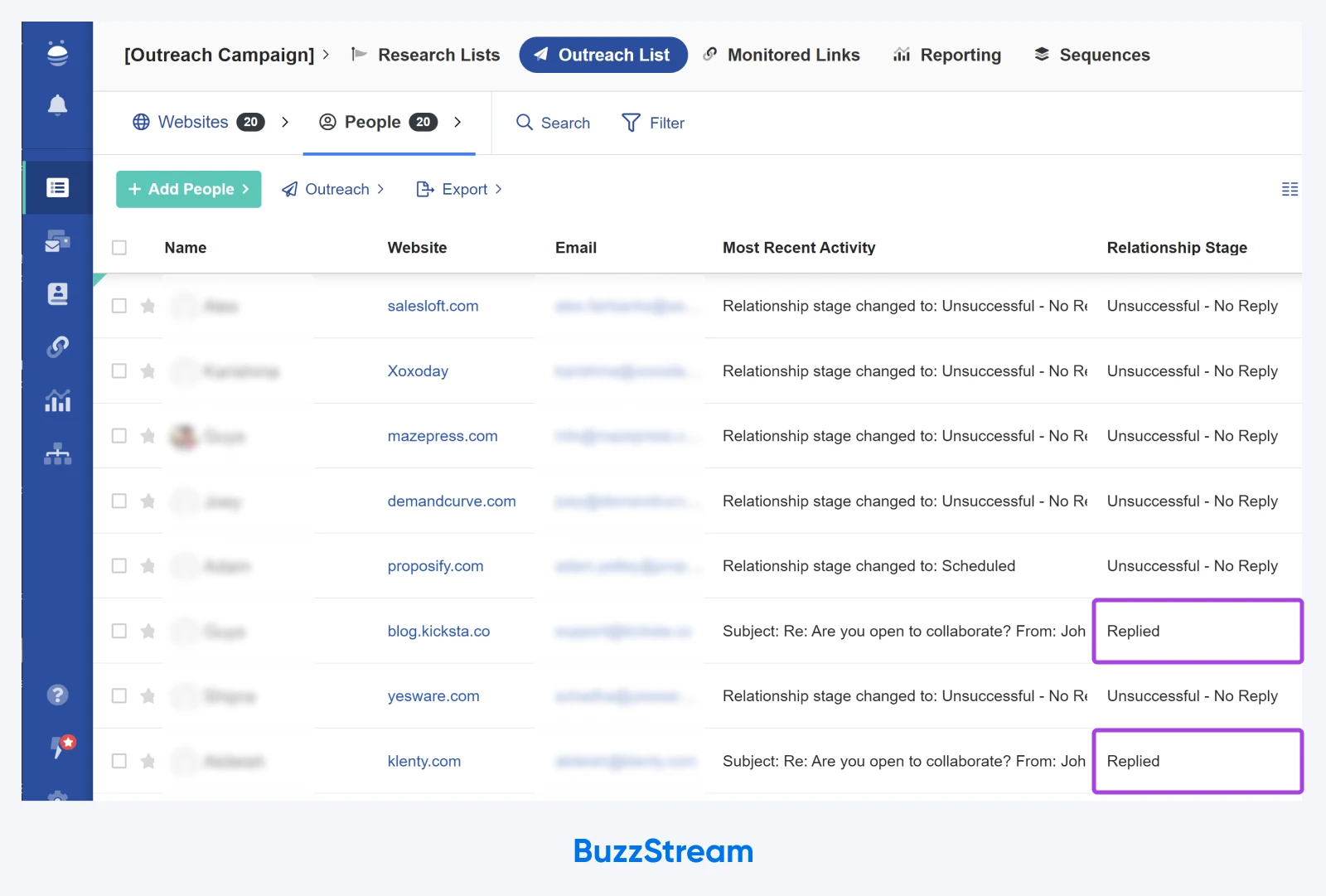
BuzzStream is a CRM for link building outreach: find contact information, manage email campaigns, and track every relationship and follow-up in one place. Earned links come from real outreach, and this keeps the process from drowning in spreadsheets.
Key Features
- Contact discovery and outreach pipeline management
- Email templates with tracking and automated follow-ups
- Team collaboration on shared link building campaigns
Pricing
Paid plans by team size.
Analytics & Reporting Tools
25. Google Analytics (Free)
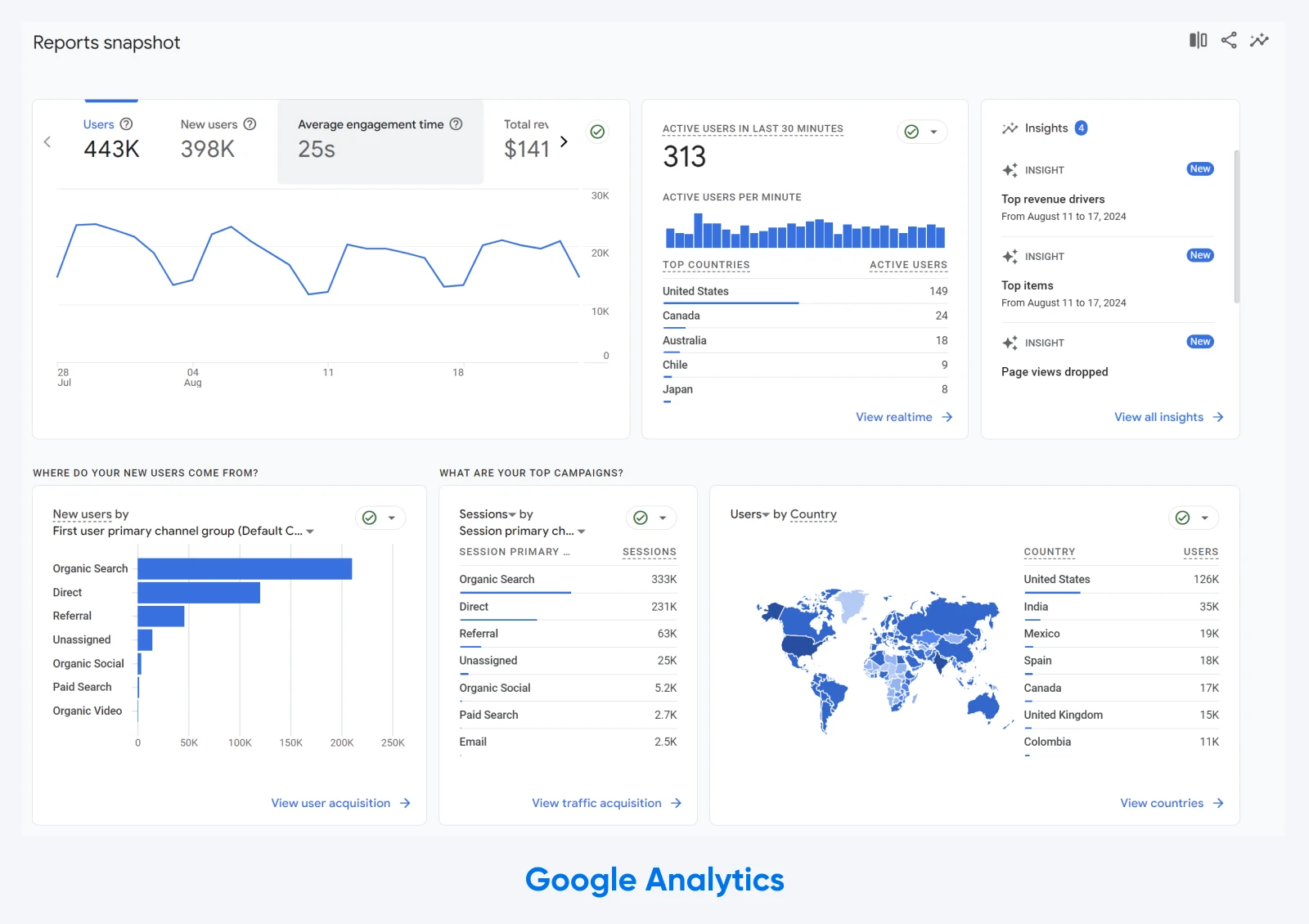
Google Analytics connects your SEO work to business outcomes: which channels drive traffic, what visitors do next, and where conversions come from. In 2026, watch your referral reports for AI sources, too: traffic arriving from ChatGPT and Perplexity shows up here first.
Key Features
- Organic vs. paid vs. referral channel breakdowns
- Conversion and engagement tracking per page and channel
- Pairs with Search Console for query-to-conversion visibility
Pricing
Free for almost everyone; an enterprise tier exists for very large organizations.
26. Similarweb
Similarweb shows you the traffic picture for any site, including your competitors’: traffic estimates, channel mix, top pages, and audience overlap. It’s the quickest read on a rival’s strategy, and its datasets now extend into AI-traffic analysis as that channel grows.
Key Features
- Competitor traffic estimates and channel breakdowns
- Industry benchmarking and market share views
- Keyword and referral intelligence across competitors
Pricing
Limited free version; paid plans for full data.
All-In-One SEO Suites
27. Semrush
Semrush is the broadest platform in SEO: keyword research, rank tracking, site audits, backlink analysis, content tools, and competitive intelligence, now extended with the AI Visibility toolkit covered above. If you want one login for the whole job, this is the default choice for marketing teams.
Key Features
- Industry-standard keyword and competitive research
- Site audit, position tracking, and backlink analytics in one project
- Classic SEO and AI visibility measured side by side
Pricing
Paid plans; limited free account to start.
28. Ahrefs
Ahrefs is built around what many consider the best link index in the industry, wrapped in a full suite: Site Explorer for competitor research, Keywords Explorer, Rank Tracker, and Site Audit, plus the separately sold Brand Radar covered above.
Key Features
- A backlink index widely regarded as the deepest in the industry
- Keyword metrics informed by real user click data
- Content Explorer for finding link-worthy topics and mentions
Pricing
Paid plans; free webmaster tier for your own sites.
29. Moz Pro
Moz Pro pairs a capable suite (keyword research, rank tracking, audits, link analysis) with the most beginner-friendly learning resources in the industry. Domain Authority, the metric everyone quotes, lives here. A strong pick if your team is learning SEO while doing it.
Key Features
- Keyword Explorer with difficulty and opportunity scoring
- Domain Authority and link research tools
- Excellent guides and academy content built into the ecosystem
Pricing
Paid plans with a free trial; several free tools on moz.com.
30. Serpstat
Serpstat is the value pick among the suites: keyword research, rank tracking, site audit, and backlink analysis at a price point friendlier to small businesses, with AI content tools folded in. You give up some data depth versus the big two; many small teams never notice.
Key Features
- Full suite coverage at small-business pricing
- Batch analysis for auditing many keywords or pages at once
- AI content features included in plans
Pricing
Paid plans with a free trial.
The Hosting-Integrated Option
31. DreamHost SEO Toolkit
DreamHost SEO Toolkit is for site owners who want guided SEO without assembling a toolbox at all: a personalized SEO plan with more than 100 automated checks, AI-powered on-page optimization and keyword tracking, and one-click optimization of titles, meta descriptions, H1 headers, and image alt text right inside WordPress. It also tracks competitor rankings and submits your site to Google, Bing, and DuckDuckGo automatically. It complements rather than replaces Search Console, and it’s built as a DreamHost hosting add-on; if your site lives elsewhere, build from the stack above.
Key Features
- Personalized step-by-step SEO plan with 100+ automated checks
- 1-click, AI-powered optimization built into WordPress
- Competitor keyword tracking and automatic search engine submission
Pricing
Monthly add-on to any DreamHost hosting plan; see the SEO Toolkit page for current pricing.
SEO Tools FAQ
What are the best free SEO tools?
Google Search Console, Google Analytics, Google Keyword Planner, PageSpeed Insights, the Rich Results Test, Bing Webmaster Tools, and Ahrefs Webmaster Tools. That free stack covers rankings, keywords, speed, and backlinks: enough to run real SEO on a small site without spending anything.
What are GEO tools?
GEO (generative engine optimization) tools track and improve how your brand appears in AI-generated answers — ChatGPT, Perplexity, Gemini, and Google AI Overviews. They monitor brand mentions, page citations, and sentiment across AI engines, the way rank trackers monitor SERP positions. Examples include Ahrefs Brand Radar, Semrush AI Visibility, Profound, Otterly.AI, and Peec AI.
What’s the difference between SEO and GEO?
SEO optimizes for ranked lists of links; GEO optimizes for being cited inside AI-generated answers. The foundations overlap heavily (crawlable sites, authoritative content, and real expertise win in both), but GEO adds new measurements (mentions, citations, sentiment) on surfaces where there are no positions to track.
Can I just use ChatGPT for SEO?
For tasks, yes: briefs, clustering, metadata drafts, schema generation. For data, no — assistants don’t know your rankings, your backlinks, or real search volumes. The working pattern is data tools for measurement plus an AI assistant for execution speed.
How many SEO tools do I actually need?
Most small businesses need three to start: Google Search Console (free), one keyword research tool, and one on-page tool for your platform. Add an AI visibility tracker once you have content worth citing, and graduate to a suite when tool-juggling costs you more time than the subscription would.
Build Your 2026 SEO Stack
The playbook hasn’t been thrown out; it’s been extended. Keep the fundamentals (keyword research, technical health, content quality, and links) and add one new discipline: knowing whether AI engines mention you, and earning the citations when they don’t. The free stack in this guide will carry a small site a long way, and most paid tools here offer a free trial or free tier, so build incrementally. (For the bigger picture on strategy, our SEO strategy guide pairs well with this list.)
And if you’d rather have professionals run the whole thing while you run your business: DreamHost’s SEO Marketing services give you a dedicated SEO team for strategy, monthly content, optimization, and reporting, without hiring in-house.

Get More Visitors, Grow Your Business
The best-designed site is worthless if no one can find it. Leverage proven online marketing strategies and techniques to help more of your target audience find you.
See More